
We build realistic
training for the
moments that count.
WASL Tech creates immersive AI and VR simulations that let teams rehearse high risk tasks, measure performance, and improve before the real moment arrives.
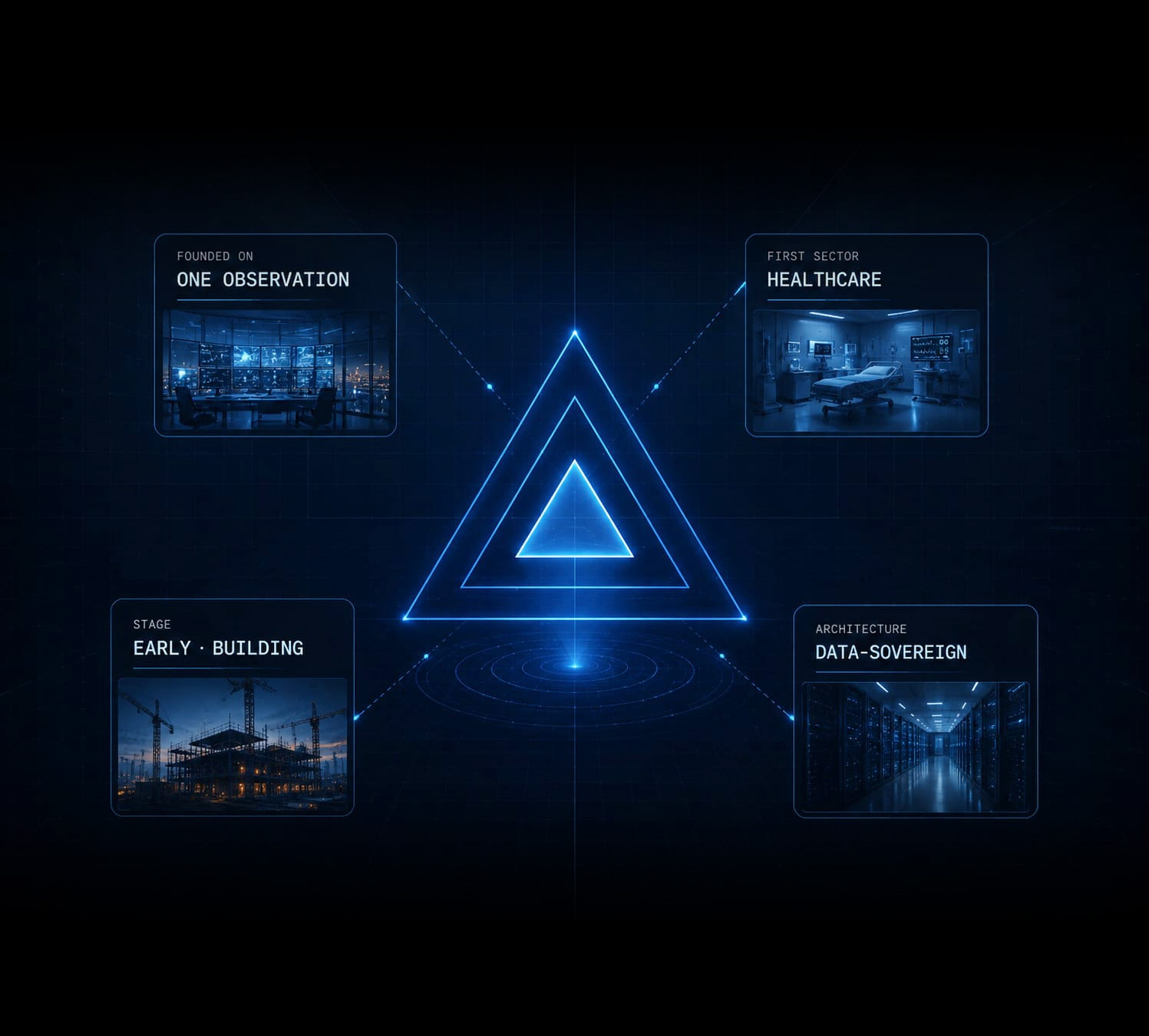
We started the company on a simple observation: the environments where mistakes carry the most weight; a deteriorating patient, a failing piece of equipment, a split second call under pressure; are exactly the environments where people get the least chance to practice. Real rehearsal is expensive, risky, or simply impossible to arrange on demand. So most training ends up being theoretical, generic, or both.
We built WASL Tech to close that gap. Our platform puts people inside realistic, AI driven simulations of the exact situations they will face on the job, lets them rehearse as many times as it takes, and turns every session into clear, measurable evidence of how ready they really are.
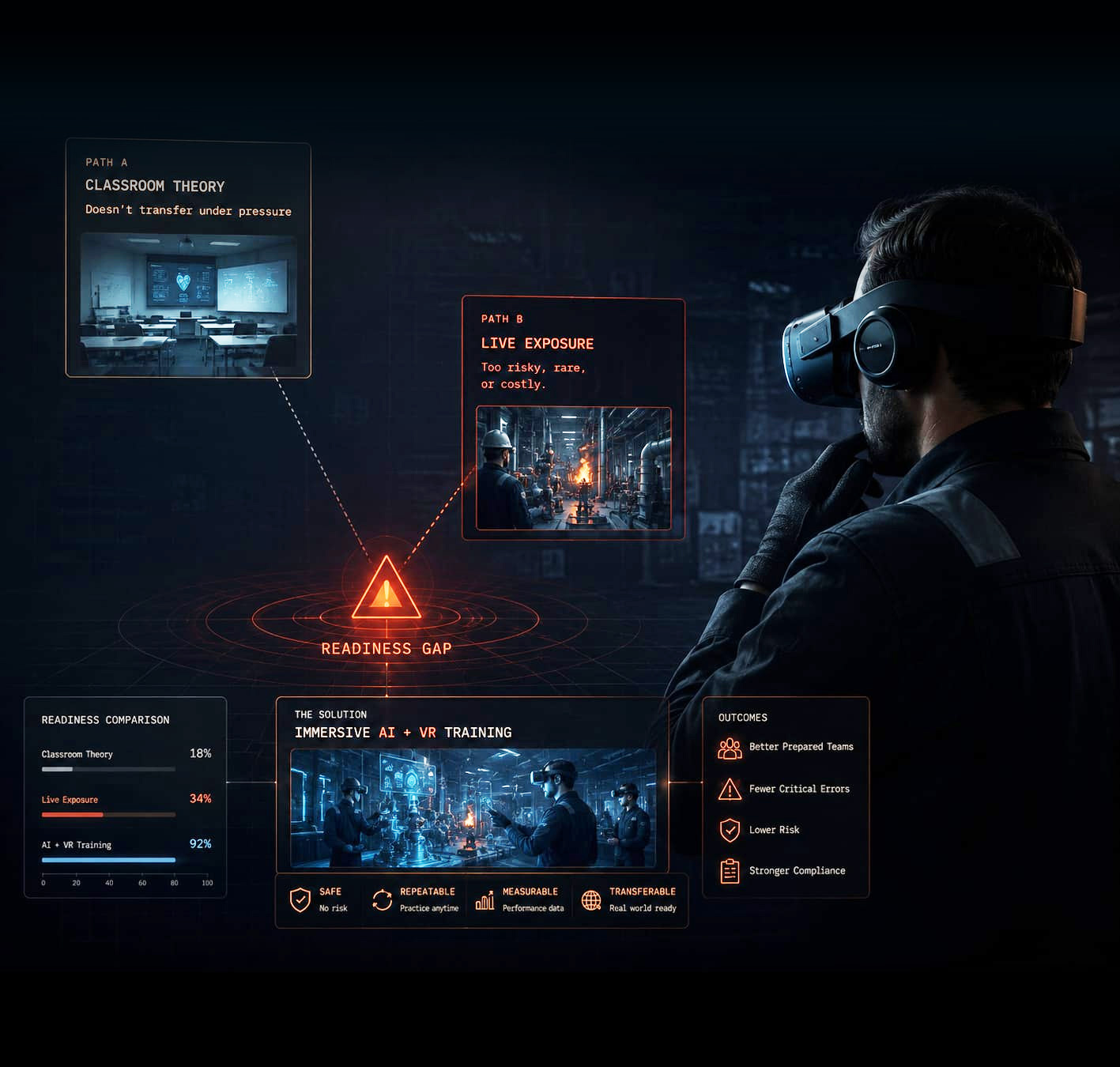
The highest risk moments are the hardest to prepare for in a safe environment.
High stakes industries have always struggled with the same trade off. You cannot induce a cardiac arrest to train a nursing team. You cannot trigger an equipment failure on a live production line just to see how someone responds.
So organisations are left with two imperfect options classroom theory that does not transfer under pressure, or real exposure that is too risky or too costly to rely on.
The result is a readiness gap that shows up at the worst possible time: during the real event, not before it. Compliance gets satisfied. Genuine preparedness often does not. We think that gap is solvable, and we built WASL Tech to solve it.
Readiness you can measure before it is tested.
Make readiness rehearsable.
To make it possible for any organisation operating in a high consequence environment to rehearse the moments that matter most — safely, repeatedly, and with evidence of the outcome.
Replace hope with data.
A world where readiness is something you can measure before it is tested, not something you hope for after the fact. We want "I think I'm ready" to be replaced with data that says so.
Realism and measurement, not one or the other.
Built on real input
Our simulations are built on real operational and clinical input, not generic scenario libraries, so they reflect how the work actually happens.
No two sessions alike
Environments respond to each trainee's decisions in real time, which means people cannot simply memorise a script.
Data that compounds
Every session generates structured performance data — what was missed, what was handled well, how response times held up under pressure.

Our beachhead, not our ceiling.
Few environments combine the stakes, the unpredictability, and the sheer frequency of high pressure moments the way clinical settings do: a deteriorating patient, a ventilator failure, a handover that goes wrong. Clinical teams already understand why rehearsal matters and why "you only get one chance" isn't an abstraction.
It is also a sector where evidence matters as much as training itself, not just attendance records.
What we learn building for healthcare carries directly into the other high stakes industries we are built to serve next: industrial and energy operations, defence, and other environments where the same underlying problem shows up in a different uniform.
What guides how we build.
Trust is not optional. It is the entry requirement.
WASL Tech runs on an on-premise, data-sovereign architecture. Training data, performance records, and scenario content stay within an organisation's own infrastructure rather than depending on external cloud systems.
We treat performance data the way our clients need us to: as sensitive, auditable, and theirs. Safety and credibility are not features we add later; they are the reason the platform is built the way it is.

One rehearsed scenario, one measured outcome, one sector at a time.
We are early. We know that. But we would rather be honest about where we are than overstate it; because the organisations we want to work with are the kind that can tell the difference.
What we are building is a way for high stakes industries to stop hoping their people are ready and start knowing it.
"The moments that matter most should not be the first time someone faces them. We are building the place where they can face them first, and walk away ready."